About a year ago today I got an email from the head of my school telling us we’d be moving to online learning for about two weeks while the Shanghai government got the Covid situation under control.
Four days after that, I got a text message from my building manager, letting us know that, due to covid cases or close contacts in our community, our district leadership decided to seal the gates to our housing complex. Just for four days, while the local government got the Covid situation under control.
Four days after that, I got another text message from the building manager letting us know that the time we were to be sealed in was extended by another four days, while the local government got the Covid situation under control.
During those four days, the Shanghai government announced that the city would undergo a phased closure – Pudong first, Puxi to follow. A week each, with schools, malls, stores, and restaurants all shut down. Traffic across the river would be heavily regulated. Just for two weeks, while the Shanghai government got the Covid situation under control.
What followed was the most massive departure from sense and science that I have seen in my lifetime. Millions of people were locked in their homes, in many cases prevented from leaving their apartments, for anywhere between 50 and 100 days. Food was difficult to source – none of the usual means were available: delivery drivers were locked in their homes or were unable to get on the road; most shops were closed, and suppliers were unable to reach the ones lucky enough to keep their doors open. Wages went unpaid or were cut, but utilities and rent were still due on time. Businesses closed for good. Emergency supplies were sent from other provinces but were unable to reach their destinations in the city. In the cases where they made it into Shanghai, they were unable to be distributed efficiently, so they were left to rot in warehouses and truck beds. Millions of Covid tests were conducted every day. God forbid yours come back positive. God forbid your neighbour’s test come back positive. God forbid the person three buildings over from you test positive – it’s off to quarantine for you, your family, your neighbours, and everybody you happened to pass by.
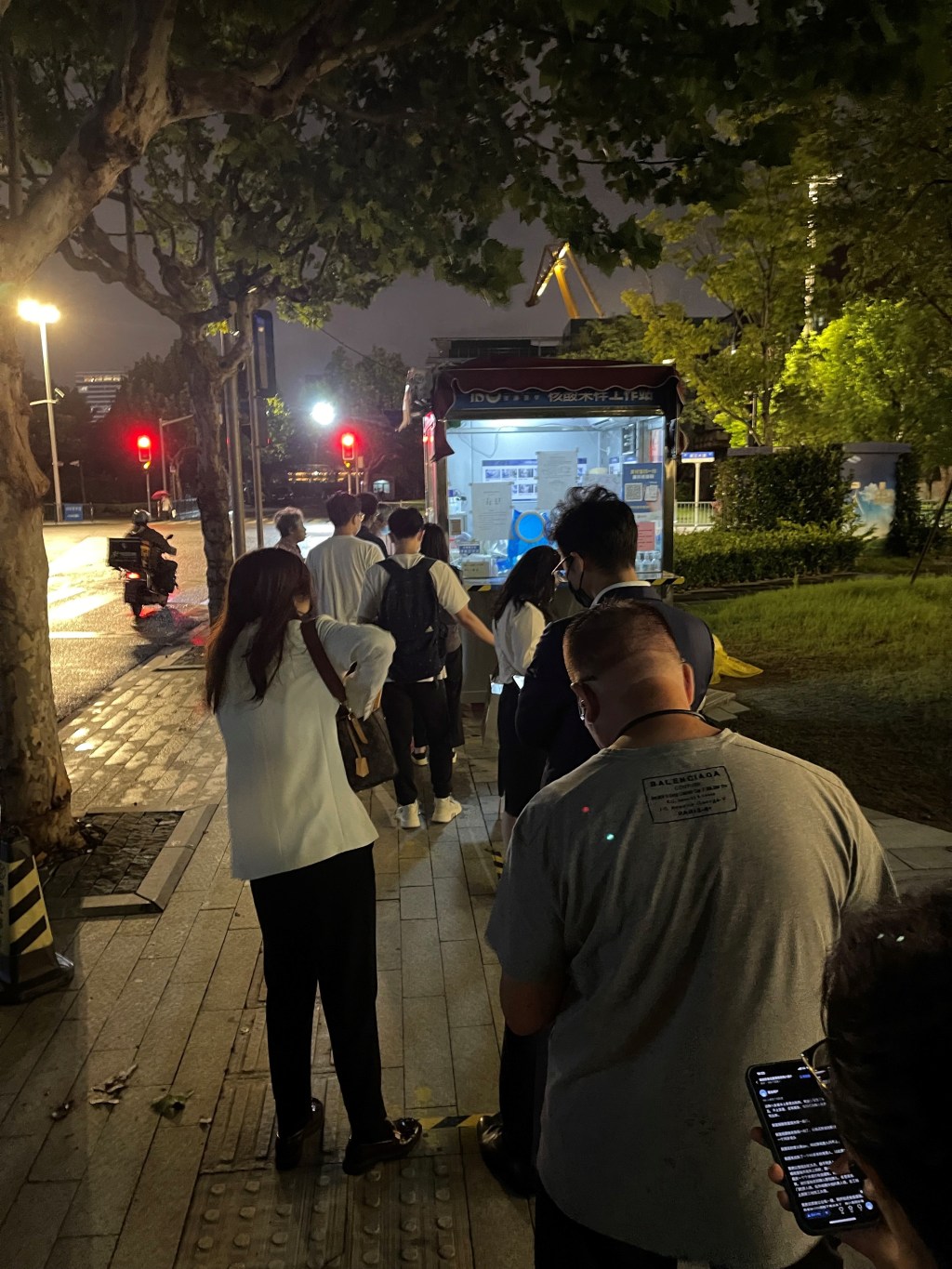
I was fortunate enough to avoid that outcome, but many of my friends were not. The quarantine centres were overcrowded, over-lit, over-loud and under supported. Filthy, uncomfortable, and dangerous (in the sense that you are more likely to get sick in one than at home; in the sense that if you were already sick you were less likely to recover well in one) it is no surprise to me that everybody I know personally who was sent to one of these places has already left China for good or has plans to do so as soon as their work contracts permit. The scars of these places are still seen in the hotels that were commandeered for their use, in the football stadiums that are still full of temporary housing, and in the empty space left behind by the hurried removal of the less permanent facilities. Even now, a year removed from all of this, I have a sort of doubled vision walking around the city; I keep seeing Covid testing booths in places where they have long been removed. I haven’t forgotten the time spent, almost daily, waiting in lines with countless strangers who just wanted to be allowed to go to work. Or to school. Or to a restaurant, a bar, a park.
After the end of the lockdown, we saw different approaches to Covid management – targeted closures, incessant testing, QR codes plastered on every doorway in the city. Irritating and tiring to be sure, but we were outside. We were at work. People were posting the most mundane things on social media the way they’d share photographs of their vacations. But those moments felt like an accomplishment. There were, of course, those who were angry at the people happy to be back outside – this was the norm, after all, we shouldn’t be thanking the government for giving us our rights, we should be holding them accountable for trying to take them away. Maybe those people are right, in a way, but what does that get us? I’m not interested in carrying that anger around with me. I didn’t want to dwell on what happened. I don’t know anybody whose mental state wasn’t in absolute tatters during those months. For better or worse a lot of us were ready to move on.
Those emotions continued to simmer in the months that followed. The weather got cooler; Covid cases rose steadily around the country. Minor lockdowns and inconsistent restrictions continued; lives were impacted more or less heavily every day. Schools closed, again. A fire in Xinjiang that some believe turned deadly only because of harsh lockdown practices (the type we saw in Shanghai: building doors barricaded or locked from the outside) marked the boiling point. I remember being entirely unsurprised by it – the specifics, certainly, but one look at the measures in place and you were asking yourself, “what happens if there’s a fire?” Well, the question had been answered – people were trapped, help wasn’t able to reach them in time, and they died. Protests flared up around China, generally peaceful, generally focused. A few bad actors took things too far (protestors calling for the end of the CCP, overzealous police arresting journalists, YouTubers claiming the revolution was beginning) but by and large people expressed their just frustration with the Zero-Covid policy and called for its end. Coincidentally, in a move entirely unrelated to the growing unrest, the government decided to lift Covid restrictions almost entirely, and almost all at once. Everybody (and I mean everybody) caught Covid in the aftermath, and somehow, we stumbled into January and the new year.
It’s been a whirlwind since then. We took a much-needed trip back to the States, everybody there got to meet Gabriel, and we managed to make it back to Shanghai despite a lot of hesitation about getting on the plane. We landed in China to an airport terminal as normal as I’ve seen since 2020. No quarantine, no testing queue, no documents to fill out. Just passport checks and immigration then you’re home free. The only reminders we had of Zero-Covid policy were airport staff in full PPE gear leading arriving travellers to immigration lines and the $600 Covid test results (that weren’t checked at any point) in our bags.
In the three weeks we were out of the country almost every Covid related restriction was lifted. In the months since, the rest followed. Inbound quarantine is gone. Masking on the subway is encouraged, but not required. A resumption and reinstatement of tourist visas was announced this week. Writing now, the only restriction that remains is a requirement that inbound travellers possess a negative Covid test result before entering the country, and even that seems like it isn’t long for the world.
We’re fully post-Covid here in Shanghai, but the scars of the last few years remain with us as they do with the city. I’ve seen more friends, colleagues, and students leave the country in the last year than I have in any of my others in China. Even more will be leaving at the end of June. In many ways, I want to write off the Zero-Covid years as an anomaly, something that will never be repeated, can never be repeated. But I can’t. It won’t happen again soon, but the spectre of it will always be there. That ghost will make it hard to feel at home in Shanghai again. It forces me to question the future in ways that I hadn’t really had to consider before – do I prefer my son to grow up in a country that will shut down his schools, his parks, and his community in the name of safety? Or, in the case of America, a country that will ignore a virus rampaging through swaths of the population in the name of normalcy? Nowhere is perfect, but Shanghai felt like it had the edge on most places before. Now, it can feel like the opposite. What’s the draw?
Spring is doing its best to announce its arrival in Shanghai today. This has always been my favourite part of the year in the city. In a few short weeks we’ll start to feel the sweltering heat of summer closing in on us, but for now the days are long, warm, and the streets are packed with bodies. Food stalls are back in business at night and restaurants have their plastic stools and tables set up outside. Last spring, there were no sounds of beer bottles clinking together; there were no sounds of ayis square dancing underneath your windows; there were no sounds of children playing in the streets. Last spring wasn’t quiet, though. Last spring you might have heard people wailing from their windows; you might have heard the cacophony of pots and pans banging together; you might have heard the cries of stray animals going unfed in your gardens. Last spring was stolen from us. From where I sit now, I can hear a group of children giggling over gossip, another group kicking a football around and a group of drivers shouting about nothing, about everything. These are the sounds of Shanghai I prefer. I’m hopeful that as this spring grows and blooms into summer, I’ll keep hearing them around the city, and that Shanghai will help me find reasons to stay.

 Words and all the rest
Leave a reply to kalacourt Cancel reply